
Float Pod & Tank Therapy System Buying Guide
What to Know Before Buying a Float Pod & Tank Therapy System
Float pod and tank therapy systems use warm (93°-95°), high-density saltwater environments to support buoyant floating, sensory reduction, relaxation routines, and wellness-focused recovery spaces in home, studio, spa, and commercial settings. Choosing the right system depends on whether the product is designed for residential floating, commercial float sessions, or advanced home installation, along with room size, filled weight, salt load, water volume, floor loading, heating, filtration, sanitation, controls, and long-term maintenance.
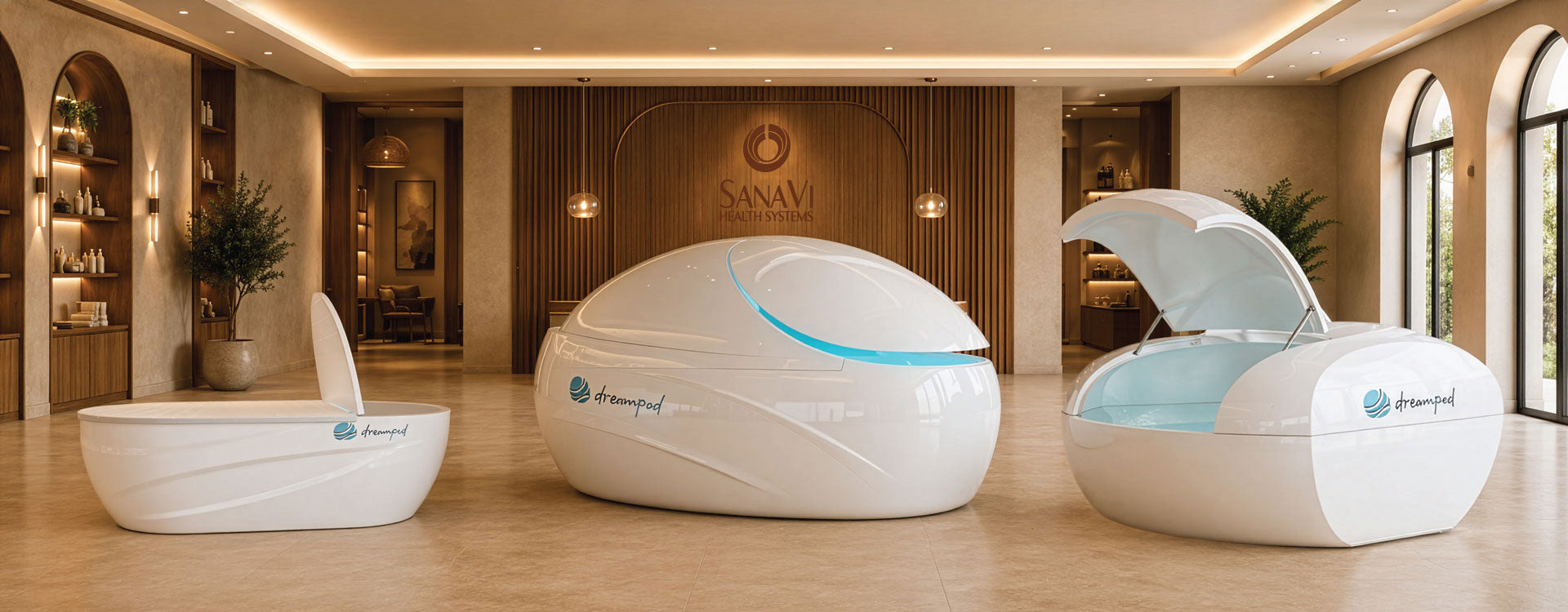
Some buyers need a compact residential float tank that can fit into a dedicated home wellness space. Others need a larger commercial float pod for repeated client use in a spa, clinic, recovery studio, or professional wellness environment. Some customers may also want to understand the Dreampod Mineral Soaker because it uses the same base platform as the Home Float Pro, but is configured for heated mineral soaking rather than full buoyant floatation.
SanaVi’s float pod and tank therapy lineup can generally be understood in three practical groups:
Residential float systems: Dreampod Home Float Pro and Dreampod Home Float Plus.
Commercial and advanced home float pods: Dreampod Sport Float Pod, Dreampod V2 Float Pod, and Dreampod Vmax Float Pod.
Related soaking option: Dreampod Mineral Soaker, which uses the same base platform as the Home Float Pro but is configured for heated mineral soaking with less salt rather than full floatation.
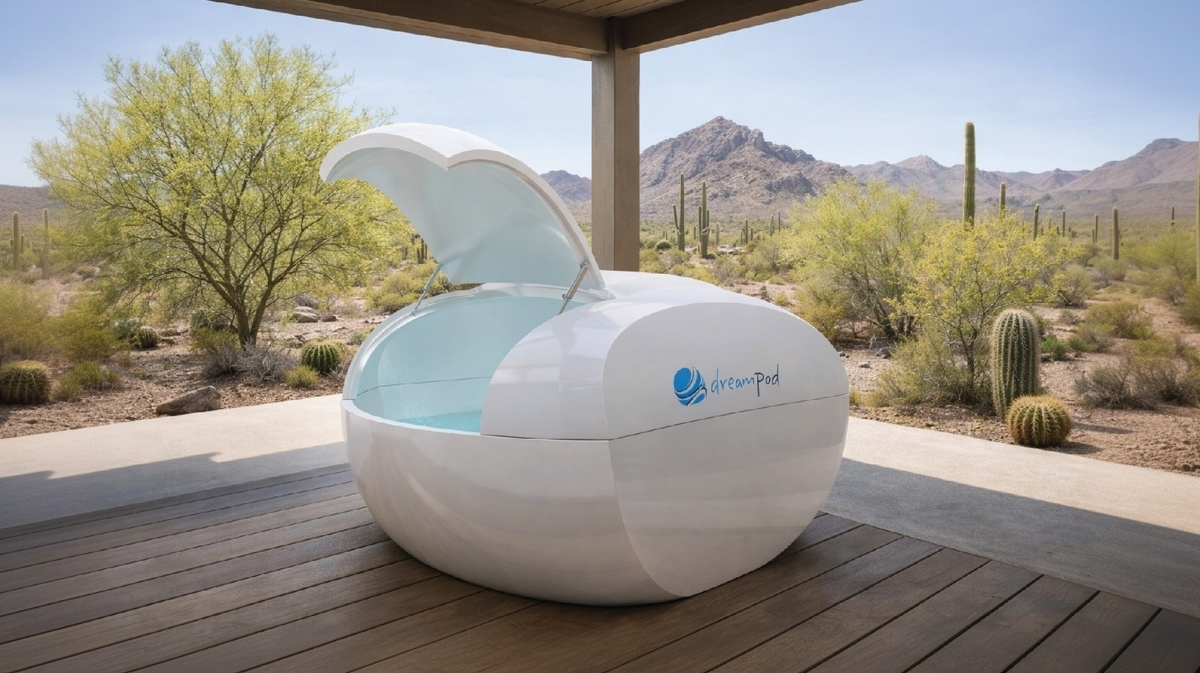
Commercial float pods can also be appropriate for advanced home use when the buyer has the space, access, floor support, electrical planning, and long-term maintenance expectations to support a larger system.

Core Buying Considerations
1. Float Pod, Float Tank, or Residential Float System
The first buying decision is which type of float system best fits the intended environment, user experience, and installation plan.
The Dreampod Home Float Pro is a residential float tank system designed around high-density saltwater buoyancy, sensory reduction, and self-contained home float use. It uses a single-piece tank design with an external engine box, wired control panel, UV sanitation, 10-micron filtration, chemical dosing, inline heating, magnetic-driven pump, and interior LED lighting.
The Dreampod Home Float Plus is a larger residential float tank system with a more substantial enclosed design, higher salt and water volume, and stronger planning requirements than the Home Float Pro.
The Dreampod Sport, V2, and Vmax are commercial float pods that may also fit advanced home environments. These systems are larger and more installation-sensitive, with higher loaded weights, larger room requirements, and stronger operational planning needs.
The Dreampod Mineral Soaker belongs in the conversation as a related same-platform soaking option, but it should not be confused with a true float system. It uses the same base platform as the Home Float Pro, but it is marketed and configured for heated mineral soaking with less salt rather than full buoyant floatation.
2. Residential, Commercial, and Advanced Home Use
Float systems should not be divided too rigidly into “home only” and “commercial only” categories.
The Dreampod Home Float Pro is designed for residential float use and can fit dedicated home wellness spaces when room size, moisture control, flooring, and access are properly planned.
The Dreampod Home Float Plus is still residential-focused, but it is larger and heavier than the Home Float Pro. It may be better suited for buyers who want a more spacious residential float experience and have a dedicated room that can handle the footprint, floor loading, moisture planning, and access requirements.
The Dreampod Sport Float Pod is positioned as an entry-level commercial float tank with a compact commercial footprint. It can support wellness centers, recovery studios, clinics, and dedicated home float rooms.
The Dreampod V2 and Vmax are larger commercial and advanced home float systems. These models are better suited for high-use professional environments or serious home installations where space, access, floor loading, and system management have already been considered.
The Dreampod Mineral Soaker may be considered by customers who like the compact Home Float Pro platform but want heated mineral soaking rather than buoyant floatation. It should be understood as a related soaking configuration, not as a replacement for a float tank when the goal is full floatation.
For SanaVi customers, the right system depends on the actual installation environment, expected use frequency, and whether the buyer wants a residential float tank, a larger commercial-style float pod, or a related mineral soaking system.
3. Space, Room Access, and Installation Fit
Float systems require more space planning than many wellness products because they involve large vessels, water, salt, humidity, maintenance access, and safe entry and exit.
The Dreampod Home Float Pro measures approximately 7 ft long × 3 ft 6 in wide × 2 ft high, with an external engine box measuring 33 in long × 21 in wide × 30 in high. The product page recommends a 10 ft × 10 ft room to allow practical access and usability.
The Dreampod Home Float Plus measures approximately 7 ft 7 in long × 4 ft 7 in wide × 3 ft 8 in high, with the same 33 in × 21 in × 30 in engine box dimensions. A 10 ft × 10 ft minimum room size is also recommended.
The Dreampod Sport Float Pod measures approximately 8 ft 2 in long × 4 ft 10.5 in wide × 4 ft 2.5 in high, with an engine box measuring 33 in × 21 in × 30 in. It is designed as a compact commercial float solution while still supporting users up to 7 ft tall.
The Dreampod V2 and Vmax require larger room planning and commercial-style placement consideration. Buyers should consider delivery access, hallway turns, door widths, room ventilation, nearby shower access, wet-room finishes, and service access around the engine box.
The Dreampod Mineral Soaker uses the same approximate 7 ft long × 3 ft 6 in wide × 2 ft high platform as the Home Float Pro and the same 33 in × 21 in × 30 in engine box sizing. It is designed to pass through standard doorways and maneuver through hallways with a minimum turning clearance of approximately 2 ft 6 in.
4. Weight, Salt Load, Water Volume, and Floor Loading
Filled weight and floor loading are among the most important specifications for float systems because the installed operating load can be much higher than the empty product weight.
The Dreampod Home Float Pro weighs approximately 176 lb empty and approximately 1,608 lb fully loaded, including about 550 lb of salt and 105 gallons of water. The load distribution area is approximately 25.8 sq ft, with an approximate floor load rating of 62 lb per sq ft.
The Dreampod Home Float Plus weighs approximately 379 lb empty and approximately 2,253 lb fully loaded, including about 772 lb of salt and 132 gallons of water. Its load distribution area is approximately 32.2 sq ft, with an approximate floor load rating of 69.6 lb per sq ft.
The Dreampod Sport Float Pod weighs approximately 551 lb empty and approximately 2,359 lb fully loaded, including about 705 lb of salt and 132 gallons of water. Its floor load rating is approximately 62.7 lb per sq ft.
The Dreampod V2 weighs approximately 640 lb empty and approximately 3,174 lb fully loaded, including about 992 lb of salt and 185 gallons of water. Its floor load rating is approximately 73.7 lb per sq ft.
The Dreampod Vmax weighs approximately 661 lb empty and approximately 3,527 lb fully loaded, including about 1,102 lb of salt and 211 gallons of water. Its floor load rating is approximately 75 lb per sq ft.
Epsom salts are not included with the purchase price of Dreampod float systems. Buyers should plan separately for the required salt load based on the specific model, since salt requirements vary significantly between residential float tanks, commercial float pods, and the related Mineral Soaker configuration.
The Dreampod Mineral Soaker uses the same base platform as the Home Float Pro but uses less salt for soaking rather than floatation. Because the salt concentration and intended experience differ, its load planning should be treated as a related soaking configuration rather than a full float-system comparison point.
For any float pod or tank installation, buyers should consider not only the empty product weight, but also the water load, salt load, floor construction, room location, and whether the installation is residential, commercial, ground-level, or upper-floor.
5. Filtration, UV Sanitation, Heating, and Water Maintenance
Float and mineral soaking systems require ongoing water management because they hold warm water, salt or mineral solution, and shared operating components.
The Dreampod Home Float Pro, Home Float Plus, Sport, V2, and Vmax all use integrated system architecture with filtration, heating, sanitation, chemical dosing, and pump-based circulation. These systems are designed to help maintain stable water conditions between sessions.
The Home Float Pro includes an external engine box, wired control panel, integrated UV sanitation, 10-micron filtration, single chemical dosing system, high-efficiency inline heater, magnetic-driven centrifugal pump, and interior LED lighting.
The Home Float Plus includes the same core residential system architecture, including UV sanitation, 10-micron filtration, chemical dosing, inline heating, magnetic-driven pump, wired control, and LED lighting.
The Sport, V2, and Vmax are commercial float pods with integrated UV sanitation, 10-micron filtration, chemical dosing, inline titanium heating, session controls, and engine box housing for operational components.
The Mineral Soaker uses the same general water-system architecture as the Home Float Pro, but with a soaking-focused configuration rather than a full float-solution setup.
For buyers, the maintenance question is not simply whether the system has filtration. It is whether the buyer is ready to monitor solution quality, keep filters maintained, manage salt or mineral levels, support the room environment, and follow the included Dreampod maintenance procedures.
6. Controls, Audio, Lighting, and Session Environment
The float experience is shaped by the environment inside the pod or tank, not just the shell size.
Dreampod float systems use wired control interfaces for session management, water temperature, filtration cycles, sanitation functions, and chemical dosing activation. This allows the system to manage operating conditions in a structured way.
Interior LED lighting is included across the float lineup and can support a more guided entry, softer visual environment, or lights-off session depending on the model and user preference.
The Sport, V2, and Vmax commercial float pods include in-tank audio capability and more structured session-management features for professional settings. These features can matter when a facility needs repeatable session timing, controlled reset cycles, and consistent user experience.
The Mineral Soaker is not designed around sensory-reduction floatation in the same way as the float pods. Its experience is centered on heated mineral soaking, warm immersion, and controlled water conditions rather than full buoyancy and sensory reduction.
Buyers should consider whether they want a compact home float environment, a larger enclosed commercial-style float pod, or a soaking-focused system with a different user experience.
7. Electrical, Network, Warranty, and Long-Term Ownership
Float systems are long-term installations, so electrical, service, warranty, and ownership planning should be considered before purchase.
The residential Dreampod Home Float Pro, Home Float Plus, and Mineral Soaker operate on North American 110V / 60Hz / 15 amp power. The product pages call for a dedicated single-phase power supply on its own waterproof residential breaker.
The commercial Dreampod Sport, V2, and Vmax models also require appropriate power planning and room preparation. Buyers should evaluate electrical access, wet-room safety, air circulation, nearby shower access, maintenance access, and delivery logistics before choosing a system.
The Dreampod float and mineral soaking systems include manufacturer warranty coverage for fiberglass structure, electronic and mechanical components, and inflatable components according to the warranty terms listed on the product pages.
Because float systems involve water, salt, electronics, filtration, heating, sanitation, room humidity, and floor loading, long-term ownership should be evaluated more like a system installation than a simple product purchase.
Common Questions Before Choosing a Float Pod & Tank Therapy System
What is the difference between a float pod and a float tank?
A float pod or float tank is designed for buoyant floating in a high-density saltwater solution, often with reduced light and external input. A float tank may be more compact or residential in design, while a float pod may offer a larger enclosed environment, commercial styling, and more structured session-management features.
Which Dreampod float system is best for home use?
The best Dreampod float system for home use depends on available space, floor loading, access, and desired experience. The Home Float Pro is the more compact residential float tank. The Home Float Plus offers a larger residential float experience. Commercial models like the Sport, V2, and Vmax may also fit advanced home installations when space and load planning are handled properly.
Can commercial float pods be used at home?
Yes. Commercial float pods can be used at home when the buyer has the space, access, electrical setup, floor support, ventilation, nearby shower access, and maintenance plan to support the system. Models such as the Sport, V2, and Vmax are designed for commercial use, but they can also fit serious home wellness installations when properly planned.
How important are salt load, water volume, and filled weight?
Salt load, water volume, and filled weight are critical because float systems become much heavier once filled and prepared for operation. Buyers should compare the fully loaded operating weight, floor load rating, load distribution area, and room location before purchase. These systems should be planned as water-based installations, not ordinary wellness devices.
Because Epsom salts are not included with the purchase price, buyers should also plan for the separate cost, sourcing, delivery, and handling of the required salt load.
Is the Dreampod Mineral Soaker the same as a float tank?
The Dreampod Mineral Soaker uses the same base platform as the Home Float Pro, but it is configured for heated mineral soaking rather than full buoyant floatation. It uses less salt and is designed for soaking, not the high-density saltwater float experience used in float tanks and float pods.
What room conditions are needed for a float pod or tank?
Float rooms should be planned for wet-environment use. Buyers should consider non-slip flooring, water-resistant wall surfaces, nearby shower access, basic air circulation, ambient temperature control, safe entry and exit space, maintenance access, and electrical safety. Larger systems also require careful attention to delivery access and floor loading.
Why buy a float pod or tank therapy system through SanaVi Health Systems?
SanaVi Health Systems helps customers compare float pods, float tanks, and related soaking systems by installation fit, water volume, salt load, floor loading, system controls, maintenance needs, and long-term ownership expectations. We focus on clear product education, manufacturer-backed systems, and practical buying guidance for home and professional wellness environments.
Ready to Compare Float Pod & Tank Therapy Systems?
Choosing a float pod or float tank starts with understanding the installation, salt load, water volume, floor loading, and user experience. SanaVi helps customers compare residential float systems, commercial float pods, and related soaking options so the final system fits the space, structure, and level of use.
STAY INFORMED
Wellness Knowledge, Delivered
Receive thoughtful wellness education,
practical buying guidance, and occasional SanaVi updates.