Skip to content

Review Your Cart

Your cart is empty

Water Restructuring & Conditioning System Buying Guide

What to Know Before Buying a Water Restructuring & Conditioning System
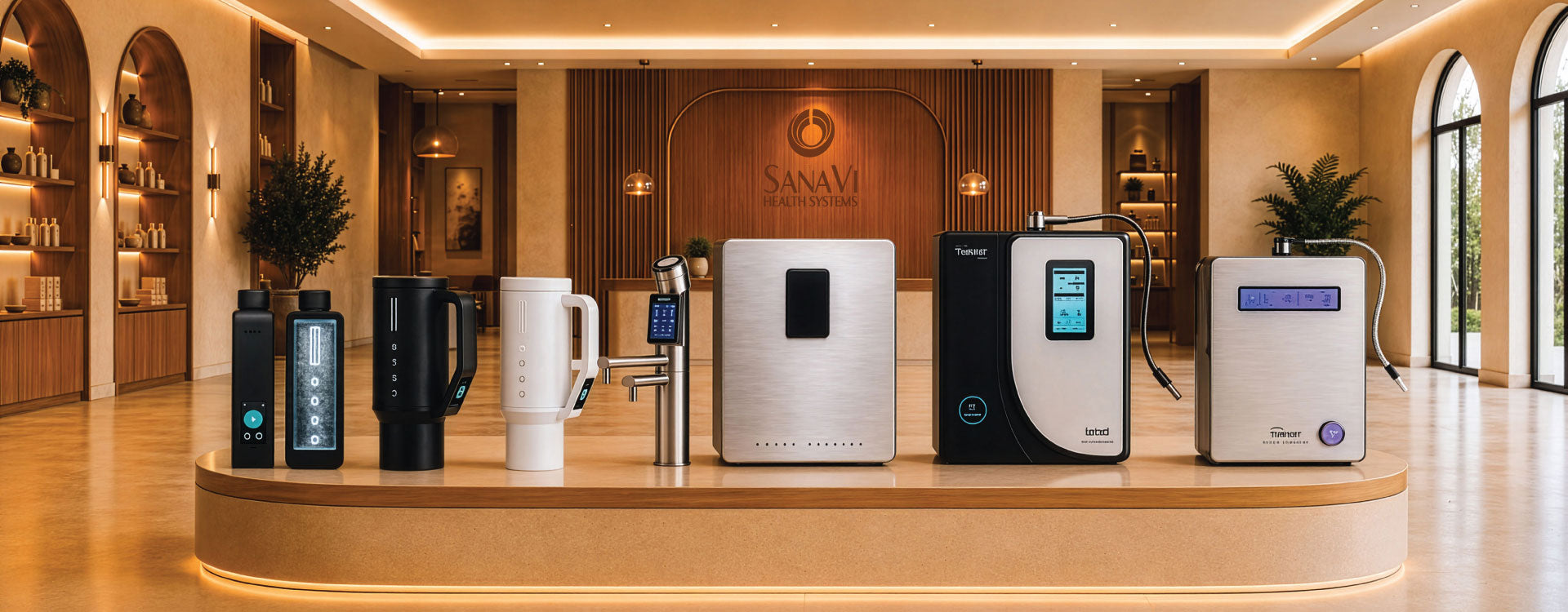
Water restructuring and conditioning systems can support different water-use routines, from portable hydrogen-rich water on the go to kitchen-based systems that produce multiple water types for home or commercial use. Choosing the right system depends on whether you need a flask or tumbler, a countertop unit, or an under-sink installation, along with hydrogen output, pH range, filtration, controls, capacity, power, maintenance, and daily-use fit.

Some buyers want a portable hydrogen water system they can use at home, work, travel, or during daily routines. Others want a kitchen-based system that can produce multiple water outputs, such as alkaline water, acidic water, filtered water, hydrogen-rich water, or specialty water modes depending on the exact model.

SanaVi’s water restructuring and conditioning lineup can generally be understood in three practical groups:

Portable hydrogen water systems: Echo Flask Hydrogen Water Bottle and Echo Forty Hydrogen Water Tumbler.

Countertop multi-output water conditioning systems: Tyent Edge 9000 Turbo, Tyent ACE-13 Turbo, and Tyent Hybrid Water Ionizer.

Built-in under-sink multi-output water conditioning system: Tyent UCE-13 Plus.

The portable systems are designed for hydrogen-rich water in a flask or tumbler format, while the Tyent countertop and under-sink systems are kitchen-based units designed around filtration, electrolysis, hydrogenation, ionization, pH selection, and multiple water output options depending on the model.

Water restructurer and conditioning systems displayed on a curved presentation table in the SanaVi Health Systems showroom, featuring countertop water ionizers and portable hydrogen water devices.
Echo Flask hydrogen water bottle displayed upright in clean studio gradient environment with illuminated hydrogen chamber
Tyent ACE-13 Turbo water ionizer countertop system in modern kitchen with couple drinking water for daily hydration

Core Buying Considerations

1. Portable Hydrogen System, Countertop Unit, or Built-In System

The first buying decision is whether the system needs to travel with the user or become part of a kitchen water setup.

The Echo Flask Hydrogen Water Bottle is a compact portable hydrogen water system with a 12 oz capacity, PEM hydrogen generation, rechargeable battery operation, touch-button control, OLED display, and hydrogen concentration up to 6 PPM in a 10-minute cycle or up to 8.25 PPM in a 20-minute cycle.

The Echo Forty Hydrogen Water Tumbler is a larger portable hydrogen water system with a 40 oz capacity, PEM hydrogen generation, double-walled stainless steel vessel, USB charging, and hydrogen concentration in the 4–6 PPM range.

The Tyent Edge 9000 Turbo is a countertop kitchen system with 9 platinum-coated titanium plates, dual filtration, adjustable pH settings, and countertop diverter-style installation.

The Tyent ACE-13 Turbo is a higher-capacity countertop kitchen system with 13 platinum-coated titanium plates, full-color touchscreen controls, dual .01-micron filtration, wide pH range, and multiple water output options.

The Tyent Hybrid Water Ionizer is a countertop kitchen system with dual electrolysis architecture, including an alkaline cell and a dedicated hydrogen booster cell.

The Tyent UCE-13 Plus is a built-in under-sink system with 13 plates, dual .01-micron filtration, touchscreen faucet control, independent alkaline and acidic outlets, automatic cleaning, and integrated safety sensors.

2. Hydrogen Output, Ionization, and Water Type Options

Not every product in this category works the same way, so water output should be compared product by product.

The Echo Flask and Echo Forty are portable hydrogen water systems. They use PEM hydrogen generation to produce hydrogen-rich water in a bottle or tumbler format. These products should not be described as kitchen ionizers or multi-output water systems.

The Tyent Edge 9000 Turbo produces multiple water outputs through its countertop electrolysis and filtration design, including adjustable alkaline and acidic water settings. It lists a pH range of approximately 2.5–11.5, hydrogen output up to 1.5+ ppm, and ORP potential up to approximately -875.

The Tyent ACE-13 Turbo provides a wider listed pH range of approximately 1.7–12.5, hydrogen output up to 1.8+ ppm, and ORP potential up to approximately -1150. It is the stronger countertop fit for buyers who want broader output range and a higher plate count.

The Tyent Hybrid Water Ionizer is designed around dual electrolysis, with an alkaline cell plus a dedicated hydrogen booster cell. It lists a pH range of approximately 3.0–11.0 and molecular hydrogen output up to 1.8+ ppm.

The Tyent UCE-13 Plus is the built-in under-sink system with a listed pH range of approximately 1.7–12.5, hydrogen output up to 1.8+ ppm, dual filtration, and independent alkaline and acidic outlets.

Buyers should not assume that all water conditioning systems produce the same outcomes. Portable hydrogen systems, countertop multi-output systems, and built-in under-sink systems serve different routines and use different technologies.

3. Filtration, Source Water, and Conditioning Method

Filtration and source water compatibility matter because these systems work with the water that enters them.

The Echo Flask and Echo Forty are designed to add molecular hydrogen to suitable drinking water. They are portable hydrogen-generation devices rather than whole-kitchen filtration systems.

The Tyent Edge 9000 Turbo includes dual filtration and is designed for countertop use with a faucet diverter connection.

The Tyent ACE-13 Turbo includes dual .01-micron filtration and 13 platinum-coated titanium plates for electrolysis-based multi-output water conditioning.

The Tyent Hybrid Water Ionizer includes dual .01-micron filtration and a dual-cell design that separates alkaline water production from dedicated hydrogen boosting.

The Tyent UCE-13 Plus includes dual .01-micron filtration in an under-sink system, with filtered water routed through a dedicated touchscreen faucet.

Buyers should consider whether they need a portable hydrogen device for drinkable water or a kitchen-based water system that combines filtration, electrolysis, pH selection, and multiple output modes.

4. Installation Type and Daily Use Environment

Installation type is one of the clearest differences in this category.

The Echo Flask and Echo Forty require no plumbing installation. They are portable, rechargeable systems designed for use at home, work, travel, the gym, or daily hydration routines.

The Tyent Edge 9000 Turbo, Tyent ACE-13 Turbo, and Tyent Hybrid Water Ionizer are countertop systems. They are designed to sit above the counter and connect to a kitchen faucet using the appropriate diverter-style setup.

The Tyent UCE-13 Plus is a built-in under-sink system. It is the better fit for buyers who want the main system housed below the counter with a dedicated faucet-style control point above the counter.

For home use, the main choice is usually convenience versus integration. Portable systems are the easiest to use anywhere. Countertop systems are easier to access and install than under-sink units. Under-sink systems create a cleaner countertop appearance but require more involved installation planning.

5. Capacity, Flow, Output, and Routine Fit

Capacity and output should match how the system will actually be used.

The Echo Flask has a 12 oz capacity, making it the smaller portable option for concentrated hydrogen water cycles. It weighs about 1 lb empty and about 1.8 lb full.

The Echo Forty has a 40 oz capacity, making it the larger portable option for users who want more water volume in a tumbler format. It weighs about 3.5 lb empty and about 6 lb full.

The Tyent countertop and under-sink systems are kitchen-based systems intended for repeated household or workplace use rather than single-bottle cycles. These systems are better suited for buyers who want multiple water options available from the kitchen water supply.

The Tyent Edge 9000 Turbo is the more straightforward countertop option. The ACE-13 Turbo increases plate count, pH range, hydrogen output, and touchscreen sophistication. The Hybrid Water Ionizer is distinct because of its dedicated hydrogen booster cell. The UCE-13 Plus is the built-in choice for buyers who want under-sink placement and dedicated faucet control.

The right choice depends on whether the buyer wants portable hydrogen-rich water, a countertop multi-output system, or a built-in system for a cleaner kitchen installation.

6. Controls, Power, Charging, and Maintenance

Control style and maintenance needs vary significantly between portable and installed systems.

The Echo Flask uses a touch-button interface, OLED display, rechargeable battery, and cycle-based hydrogen generation.

The Echo Forty uses USB charging and portable operation in a larger tumbler format.

The Tyent Edge 9000 Turbo uses countertop system controls with selectable water settings and automatic cleaning functionality.

The Tyent ACE-13 Turbo adds a full-color touchscreen interface, advanced water selection, and automatic cleaning.

The Tyent Hybrid Water Ionizer uses controls designed for its dual electrolysis and hydrogen-boosting architecture.

The Tyent UCE-13 Plus uses a touchscreen faucet interface, independent alkaline and acidic outlets, automatic internal cleaning, and integrated safety sensors.

Maintenance should be considered by system type. Portable systems require charging and appropriate cleaning habits. Kitchen-based systems require filter awareness, cleaning cycles, proper installation, and ongoing care based on the manufacturer’s instructions.

7. Warranty, Support, and Long-Term Ownership

Long-term ownership depends on how often the system is used, how it is installed, and what kind of maintenance the buyer is comfortable managing.

The Echo Flask and Echo Forty each list a 5-year warranty, giving portable hydrogen water buyers longer-term support for bottle or tumbler-style use.

The Tyent systems list lifetime warranty coverage, which is a major ownership distinction for the countertop and under-sink water conditioning systems.

Portable systems may be easier to start with because they do not require plumbing changes or kitchen installation. Countertop systems create a more permanent daily-use routine while staying accessible above the counter. The UCE-13 Plus is the strongest fit for buyers who want a cleaner built-in installation and are comfortable with under-sink placement.

For SanaVi customers, long-term fit should be evaluated by use location, capacity needs, installation comfort, filter maintenance, controls, warranty coverage, and whether the buyer wants hydrogen water on the go or a kitchen-based multi-output system.

Common Questions Before Choosing a Water Restructuring & Conditioning System

Ready to Compare Water Restructuring & Conditioning Systems?

Choosing a water restructuring or conditioning system starts with understanding where and how the water will be used. SanaVi helps customers compare portable hydrogen systems, countertop multi-output units, and built-in under-sink systems with a clear focus on output type, installation, controls, maintenance, and long-term fit.